Introducing Amazon CloudWatch Omni: AI-powered observability for generative AI and agentic workloads and application performance

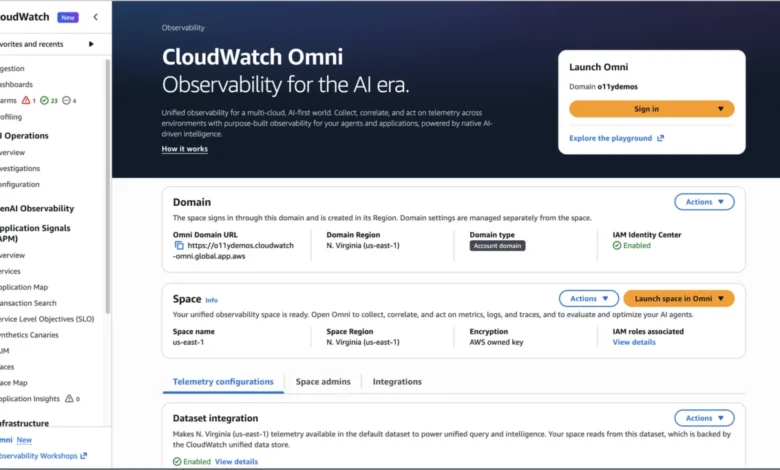
In a significant shift toward autonomous, AI-driven infrastructure management, Amazon Web Services (AWS) has unveiled Amazon CloudWatch Omni, a specialized observability platform designed to unify the monitoring of traditional software applications and emerging generative AI workloads. By decoupling the observability experience from the traditional AWS Management Console, Amazon is aiming to address the mounting complexity faced by engineering teams who struggle with fragmented toolsets, manual dashboard maintenance, and the "context-switching" tax that often plagues incident response cycles.
The release of CloudWatch Omni signals a broader industry trend where observability is evolving from a reactive, manual exercise into an automated, AI-augmented workflow. As cloud environments move toward agentic architectures—where AI agents execute tasks on behalf of users—the telemetry required to monitor these systems has grown exponentially in complexity.
The Evolution of Cloud Observability
For over a decade, CloudWatch has served as the backbone of AWS monitoring. However, as cloud-native architectures shifted from monolithic applications to microservices and, more recently, to Large Language Model (LLM) agentic chains, the sheer volume of signals—logs, metrics, and traces—has outpaced the ability of human operators to interpret them in real-time.
Industry data suggests that the average engineering team spends upwards of 30% of its time on "toil"—manual tasks such as updating dashboard thresholds, reconciling data across disparate monitoring tools, and communicating incident status across siloed teams. This fragmentation often results in increased Mean Time to Resolution (MTTR), as critical context is lost between team handoffs.
CloudWatch Omni attempts to solve this by organizing data around the "application" as a functional unit rather than as a collection of individual AWS resources. By leveraging the OpenTelemetry (OTLP) standard, Omni allows developers to maintain their existing instrumentation while shifting the focus from infrastructure signals to application health metrics.

Core Features and Technical Architecture
The platform is built upon three foundational pillars: a unified collaborative workspace, adaptive topology mapping, and an integrated AI investigative engine powered by the Amazon DevOps Agent.
The collaborative workspace is perhaps the most immediate change for users. By providing a dedicated URL accessible via enterprise Single Sign-On (SSO) through AWS IAM Identity Center—supporting providers such as Okta and Microsoft Entra ID—Omni allows stakeholders outside of the traditional AWS console ecosystem to view and investigate system health. This democratizes access to observability data, allowing SREs, developers, and product managers to view the same "single source of truth" during an active incident.
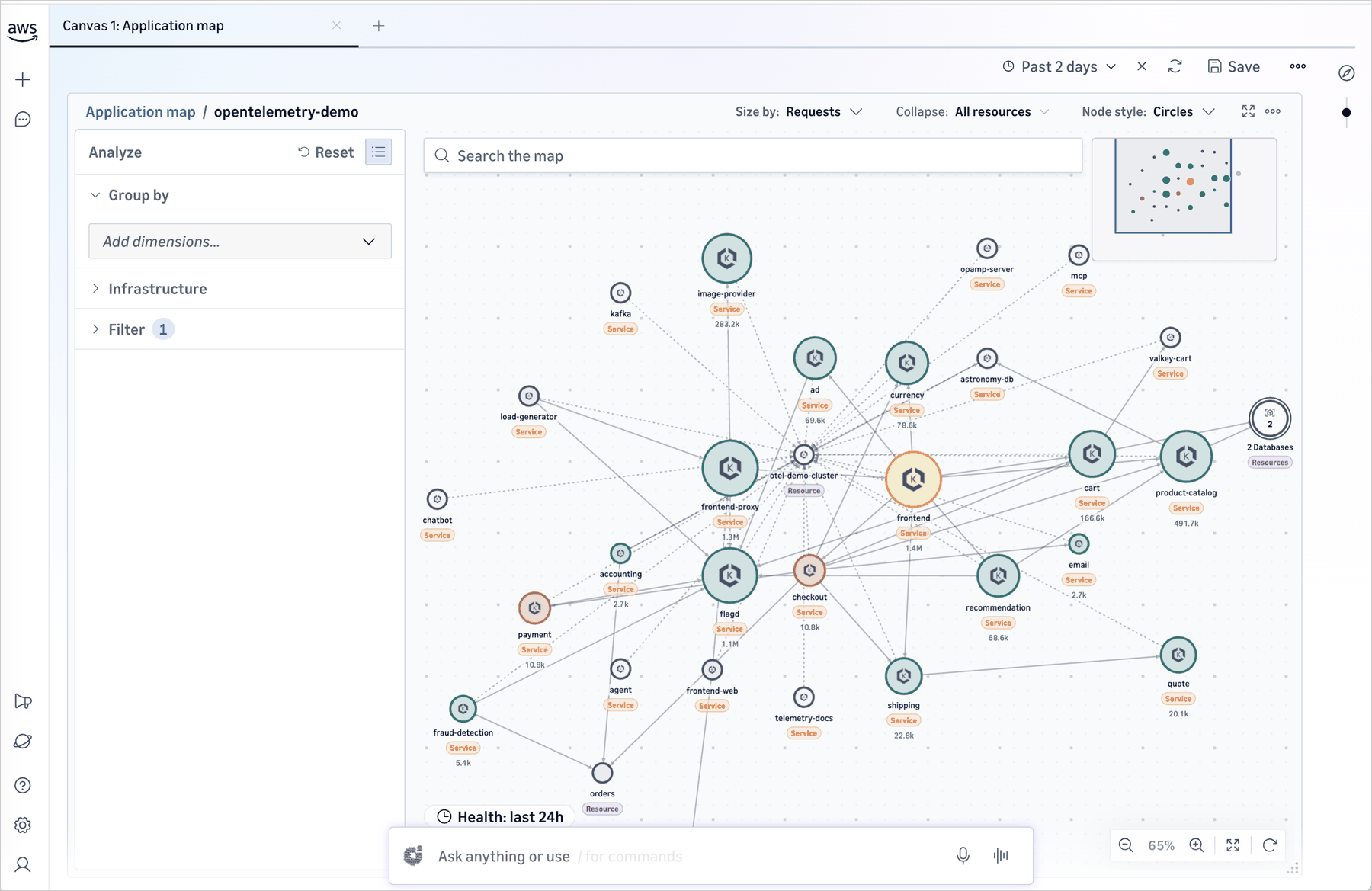
The platform’s adaptive topology is designed to reduce the maintenance burden of static monitoring. In traditional setups, engineers must manually configure dashboards and set alerts for every new service deployment. Omni’s automated discovery engine continuously scans telemetry streams and AWS Config data to map service dependencies in real-time. If a new microservice is deployed or a dependency is updated, the platform automatically adjusts the application map, ensuring that health alerts remain relevant to the current system state.
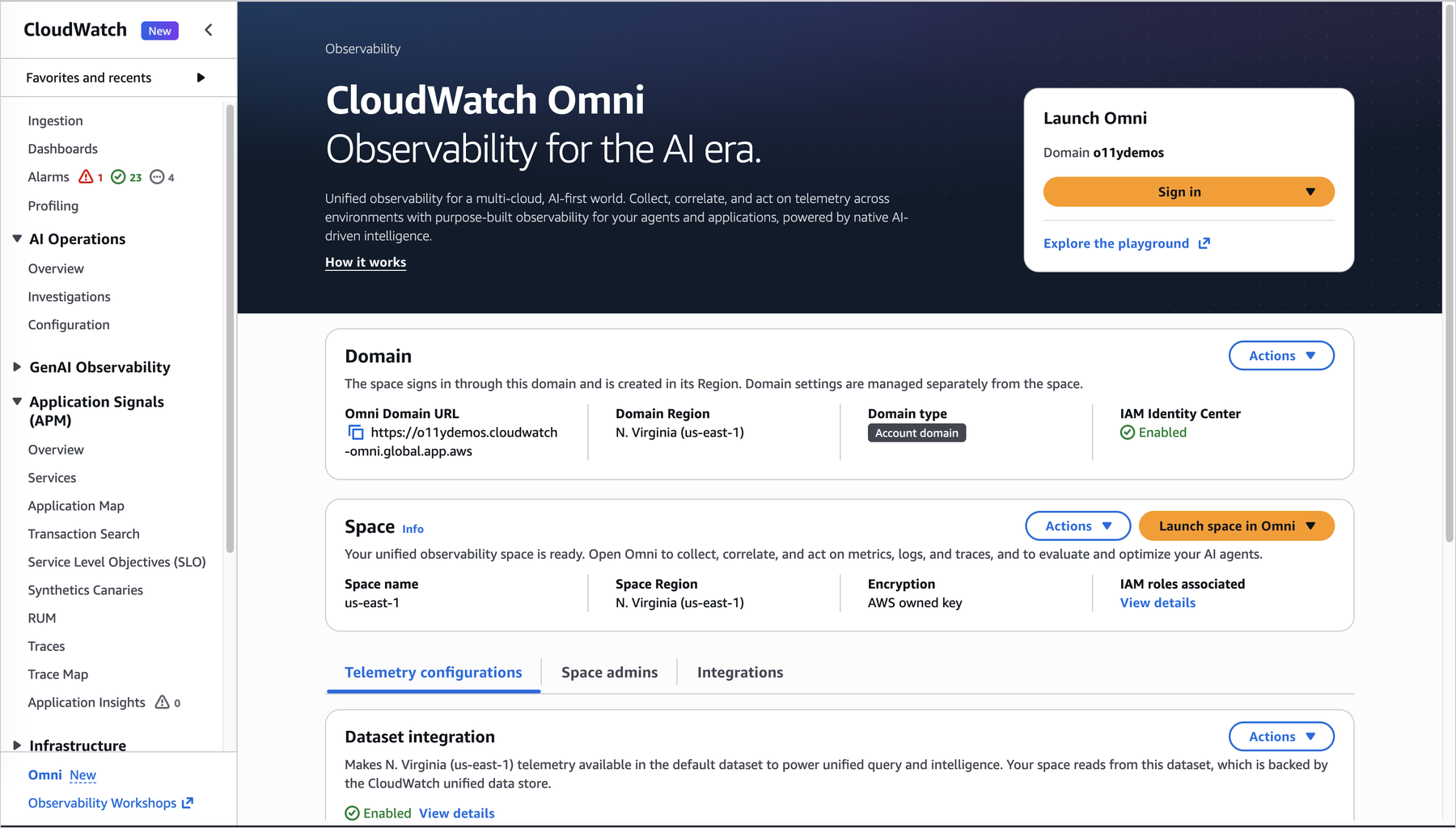
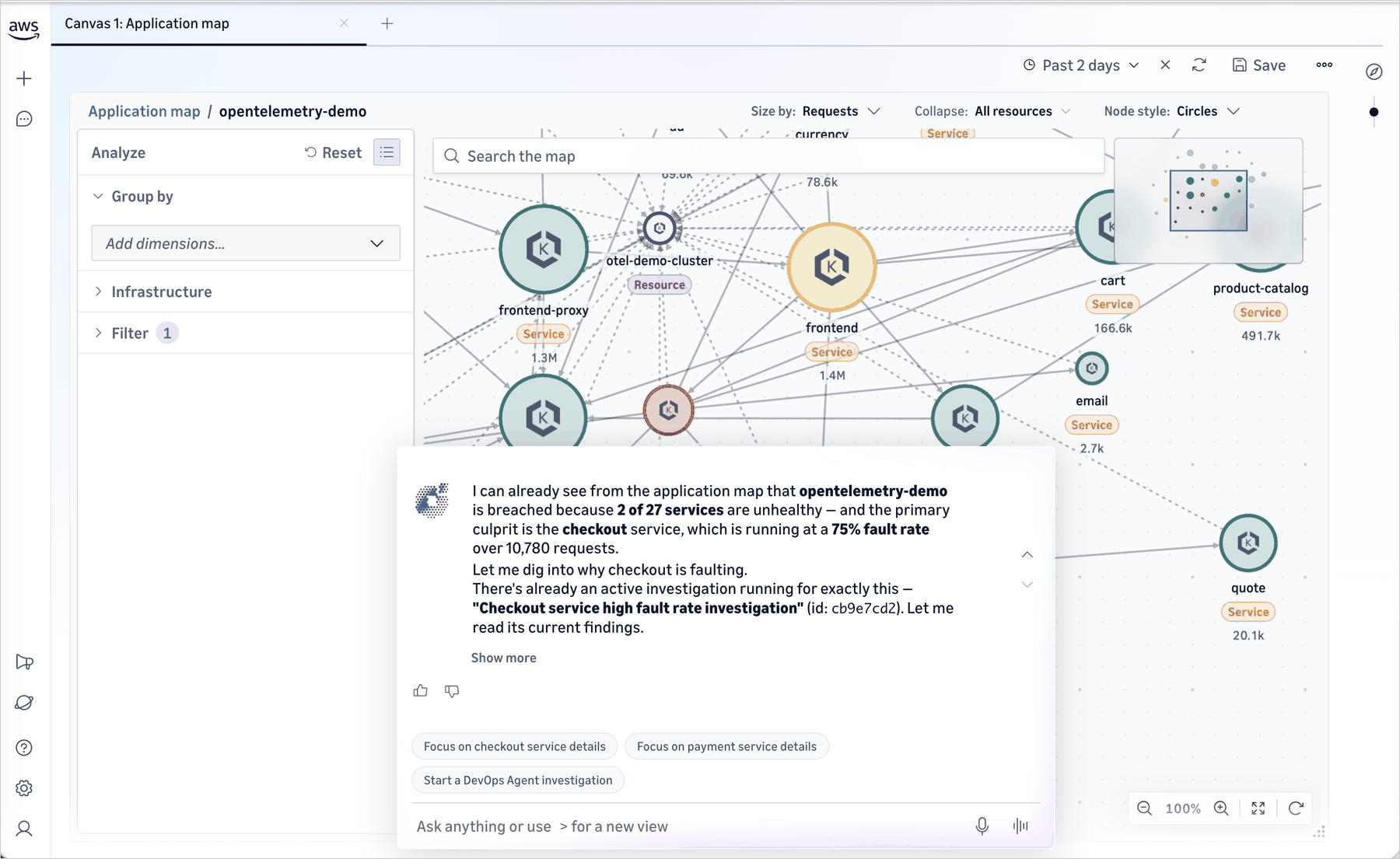
Perhaps most notably, the integration of the Amazon DevOps Agent shifts the role of the AI from a simple notification bot to an active participant in troubleshooting. The agent is trained to analyze the same telemetry stream as the human engineer, providing a "grounded" analysis that correlates events across service boundaries. For example, if a checkout service experiences a latency spike, the agent does not merely flag the error; it traces the root cause through the dependency graph, correlates the latency with a recent deployment or a downstream API bottleneck, and logs the entire history for post-incident review.
Chronology and Operational Workflow
The shift toward this new paradigm follows a multi-year effort by AWS to integrate generative AI capabilities into their core operational tools. While the initial groundwork for these agentic capabilities was laid during the development of the Amazon DevOps Agent throughout 2025, the launch of Omni represents the first time these tools have been synthesized into a dedicated, application-centric interface.
A typical incident response workflow within Omni demonstrates the reduction in manual labor. Upon the triggering of an alarm, the system automatically initiates an investigation session. This session is pre-populated with:
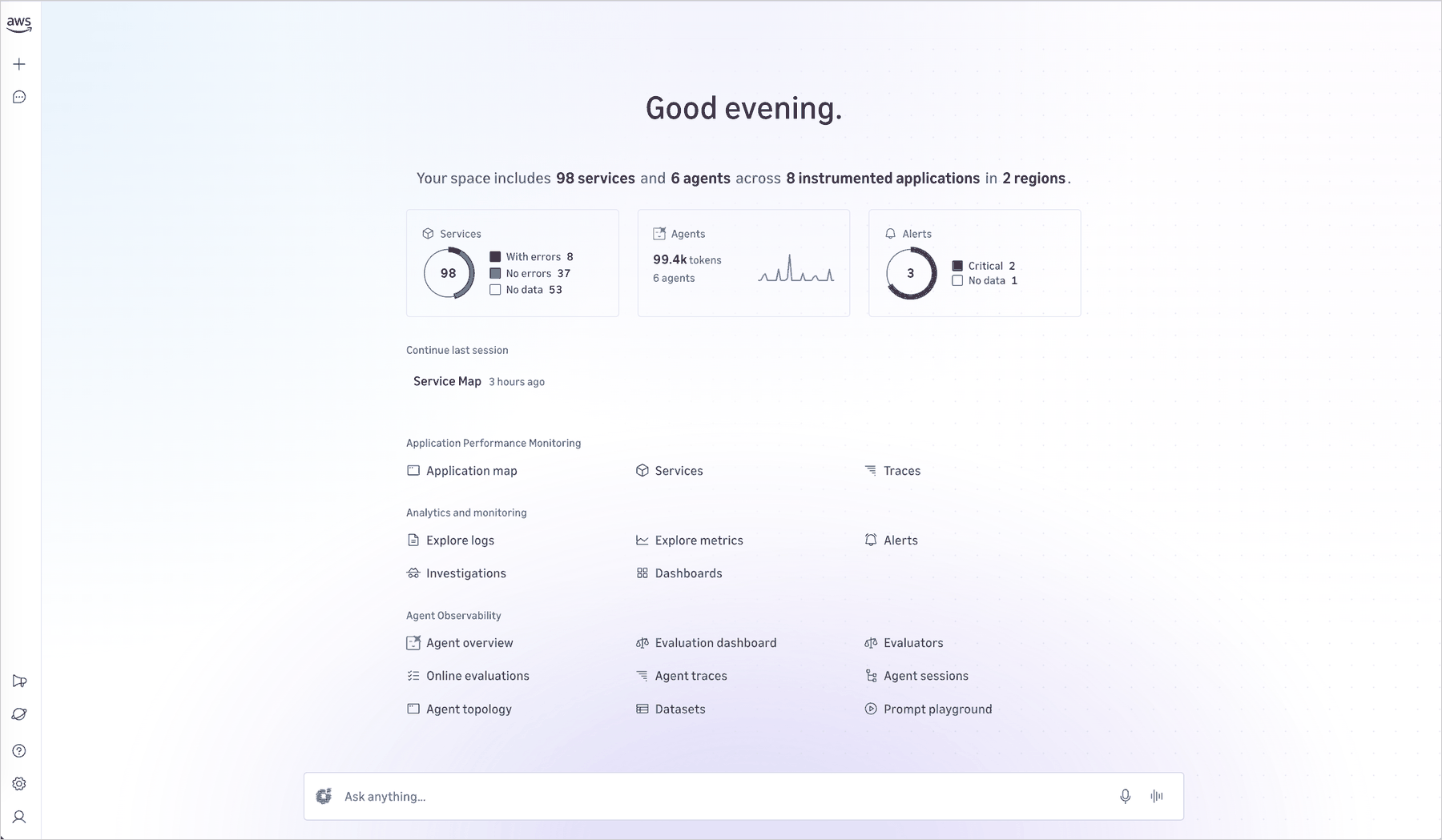
- Topology Context: A visual map showing the affected service and its upstream/downstream dependencies.
- Correlation Data: Time-stamped events, including recent CI/CD deployments and external API changes.
- AI Analysis: A summary provided by the DevOps Agent outlining the most likely root causes based on historical patterns and current telemetry.
This structured approach eliminates the need for engineers to manually aggregate screenshots or consolidate information in external collaboration tools like Slack. The session acts as a persistent record of the investigation, which automatically populates post-incident reports.
Implications for Engineering Teams
The release of CloudWatch Omni reflects a broader shift in software engineering philosophy: "Observability as a Service." By abstracting away the underlying infrastructure management, Amazon is nudging organizations toward a future where developers spend less time "monitoring" and more time "observing"—asking questions of their systems in plain English rather than navigating complex, pre-defined query interfaces.
Market analysts observe that this move directly targets the competitive landscape of observability, where third-party platforms have gained significant traction by offering better user experiences than native cloud provider tools. By offering a "console-less" experience, AWS is directly addressing one of the primary critiques leveled against native cloud monitoring tools: that they are too closely tethered to the infrastructure layer and insufficiently accessible to non-admin roles.
However, the transition is not without challenges. For large, complex enterprises with thousands of legacy services, the success of a transition to an application-centric model like Omni depends on the maturity of their existing OpenTelemetry instrumentation. While Omni is designed to ingest existing CloudWatch data with minimal reconfiguration, the quality of the insights provided by the AI agent will ultimately be constrained by the depth and breadth of the telemetry data provided by the users.
Strategic Outlook and Future Integration
The integration of generative AI into the observability lifecycle is viewed as a necessary evolution for the management of agentic workloads. As companies increasingly deploy AI agents that make autonomous decisions, the traditional "log-and-monitor" approach becomes insufficient. These agents operate in non-linear ways, making their failures harder to debug. CloudWatch Omni’s purpose-built features for AI agents—such as trace exploration and evaluation frameworks—suggest that AWS is positioning itself as the primary infrastructure provider for the "AI-native" enterprise.
Pricing and availability for the platform have been aligned with standard CloudWatch tiers, encouraging adoption by existing customers who can toggle the "Try CloudWatch Omni" feature directly from their consoles. By keeping the platform within the existing AWS ecosystem, Amazon provides a low-friction path for adoption, essentially offering a modernized interface on top of existing data investments.
As the industry moves toward 2027, the success of CloudWatch Omni will likely be measured by its adoption rates among SRE teams and the reduction in MTTR across large-scale deployments. For now, the tool represents a significant milestone in the effort to make complex cloud systems more intelligible, collaborative, and resilient in the face of ever-increasing architectural complexity. By shifting the focus from "what is broken" to "why it is broken," AWS is setting a new standard for what it means to observe modern software.